Types of Lock Nuts: Everything You Need to Know

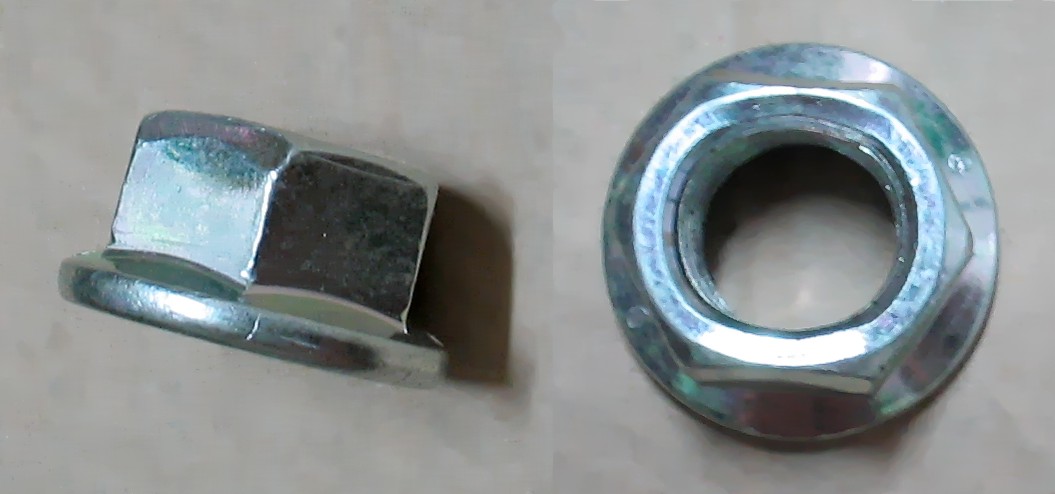
The term lock-nut is a broad categorization of threaded hole fasteners that provide high resistance to or entirely eliminate the possibility of accidental unfastening, especially compared to typical hex nuts.
Lock nuts are designed to prevent unfastening caused by vibrations or other external forces, which makes them suitable for applications associated with the risk of a fastener becoming loose over time. However, not all lock nuts are made equal, and in this article, we’ll discuss different types of lock nuts, and how they can help your project.
Lock Nut Types
There are several different types of lock nuts available on the market, mostly distinguished by how they create the locking action. Here’s the breakdown of the most common types:
Castle Nut
Castle nuts, or castellated nuts, feature a unique shape that resembles the tiny turrets of a castle, which is how they got their name. They’re designed to be used with a cotter pin or a wire lock in low-torque applications in the automotive and aerospace industries.
The notches in their design provide a space for the cotter pin to pass through, which prevents the castle nut from being unfastened. Despite offering a reasonable amount of security, castle nuts are easily removed for readjustment or disassembly.
Nylon Insert Lock Nuts
Nylon insert lock nuts, or elastic stop nuts, feature a layer of nylon inside the nut. When they’re fastened onto a bolt, the bolt’s threads displace the nylon instead of cutting it. This displaced nylon within the nylon insert nut then exerts pressure on the threads and prevents vibration and accidental unfastening.
However, the presence of nylon makes the self-locking nut susceptible to harsh chemicals and high temperatures. These almost always require tools for fastening and unfastening, as well as frequent replacement.
Hex Jam Nuts
Hex jam nuts are metal lock nuts, and as their name implies, they’re used in conjunction with another nut to jam the bolt together. They’re typically thinner than your standard nut, but they’re tightened against one another to prevent accidental unfastening.
Prevailing Torque Lock Nuts
Prevailing torque nuts, also known as Stover lock nuts, have a unique thread-locking mechanism similar to that of nylon lock nuts. These fasteners have a built-in, unthreaded cone that acts like a locking nut by generating massive friction between the threads of the coupling component.
These demand the use of specific tools during assembly and disassembly, as they require a significant amount of force compared to other types to perform a locking action.
Two-Way Lock Nuts
Two-way lock nuts, also known as center lock nuts, rely on distorted threads to exert pressure on the bolt threads and prevent unfastening. However, unlike prevailing torque lock nuts, which have a top lock thread, two-way nuts feature a distorted thread at the center of the nut.
Serrated Flange Lock Nuts
These types of nuts feature a built-in flange with a serrated backside, which prevents the nut from backing off as it’s being tightened, especially into metal surfaces.
K-Lock Nuts
K-Lock nuts also feature a lock washer with serrations, mostly used in medium load, low torque applications.
Shop Industrial Nuts and Bolts


Obviously, different nuts are more applicable depending on the situation and application. If you want to learn more about these fasteners, or more typical nuts and bolts, such as a winged nut, browse our catalog of industrial fasteners including many of these types of nuts.